
✨ Hi! I'm Eshaal, a sophomore at UPenn who's interested in biomedical sciences, society/self, and international affairs. Welcome to my writing space!
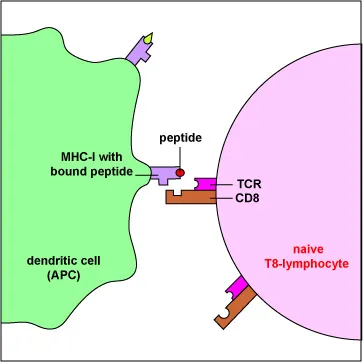
TABLE OF CONTENTS
SONG OF THE MONTH
Intro: Recognition
I've been noticing the element of recognition a lot in my life lately.
I studied for my biology final that immune receptors recognize specific viral antigens and respond accordingly. During the latest debate society meeting we discussed the cruciality of recognizing where our club dynamics stood in order to improve them under new leadership. I came across Leslie Morgan Steiner's TED Talk on abuse last week, where she discussed the importance of recognizing warning signs in relationships.
Recognition --> solution.
For some reason I just kept encountering the word in rapid succession. It got me thinking about all the little instances of recognition we face every single day. We know what objects we are looking at and which name corresponds to which face. If we cannot recognize, we become disordered - take the medical diagnosis of prosopagnosia, the inability to recognize faces. There's a very simple reason for that: we cannot properly respond to things we cannot recognize in the first place. In this regard, recognition is the key to thriving.
We cannot fix what we cannot recognize in the first place.
As much innate as it is to the brain, recognition is also a skill. We can be quite silly sometimes by missing cues right in front of us. Or, we forget to take a step back after immersing ourselves into the echochambers of our habits, thus keeping us from recognizing patterns that we ought not repeat.
Here are some reasons I think so.
1: Biologically, we are alive because of the body's amazing recognition mechanisms.
It is the specificity of our body's recognition systems that allows us to successfully fend off so many threats every single day.
There is receptor specificity involved in pretty much every important bodily response. Receptors are proteins which can fold into so many 3D structures that elucidating their shapes is one of the largest challenges in modern science. For reference, just ONE section of ONE antibody can have over 100 billion conformations depending on its V(D)J recombination region alone. That means they can get incredibly specific about what binding agents they recognize. We are born with the tools to make any defense we could possibly need. The key to successful bodily response is recognition.
The immune system is a fantastic example of this. In order to respond with the proper memory cells - or even general, nonspecific immune response - our cells have to recognize that there is a problem in the first place. This primarily thanks to receptors, which, when bound to antigens that fit them, can activate immune responses.
What happens when our cells can't recognize themselves? Autoimmune disorder.
"Recognition of these molecular structures allows the immune system to distinguish infectious nonself from noninfectious self."
Plus, if your immune system recognizes a pathogen it's actually encountered before, it can speed up its response with pre-existing pathways.
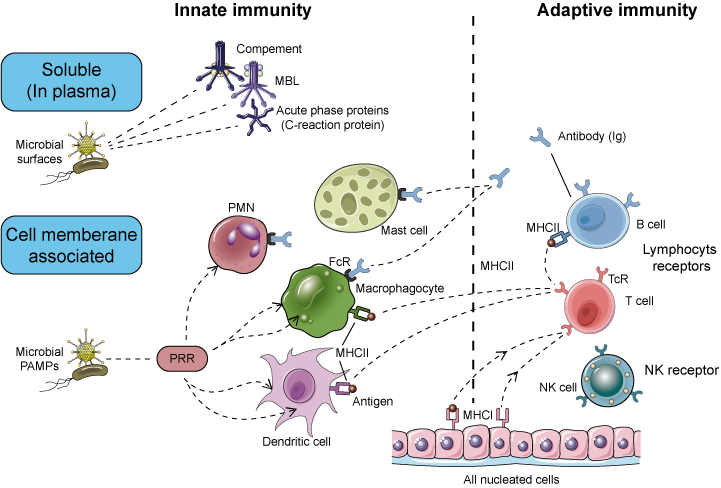
There is even more specificity in recognition here that we don't need to go into right now, but the takeaway is that recognition is the crucial first step to response. This is such an important skill that our bodies literally kill off immune cells that cannot recognize certain receptors before they mature. It's also worth mentioning that this is an elegant but complicated process; we still don't fully know the ins and outs of how immune cells figure out which cells are our own.
Recognition is not just necessary to immunity. Our hormones, brain activity, sight, hearing, and so on all rely on the ability to recognize and differentiate a myriad of different signals. We use this skill not just to defend but to regulate homeostasis. Every biology nerd knows about the many different signal transduction pathways that rely on one receptor recognition site after the other. If this does not happen, we cannot respond with the appropriate mechanisms, very possibly resulting in death.
2: Recognition leads our interpersonal dynamics and meta-cognition.
Pivoting from nitty-gritty physical biology, I've also been thinking a lot about pattern recognition in our day-to-day interactions. In some ways, we are excellent at it. In others, we could use some practice.
For instance, we are really good at recognizing people. We don't usually think twice before knowing whose face is in front of ours. This is such a basic level of recognition that we take for granted, but it lays the foundation for every bit of our interactions.
We recognize more deeply, too. You know your friends' tendencies as people (I get reels of bubble tea every day because my friends know I'm addicted). You might recognize items that are associated with them (just today I saw a specific design of silver necklace and immediately thought of my friend who wears that style). And, on a cheesier level, we show people that we love them by recognizing who they are and perhaps recognizing when they are not being themselves.
Prosopagnosia (noun, medical): a form of visual agnosia characterized by an inability to recognize faces
Yet we are sometimes a lot worse at recognizing patterns of behavior - ESPECIALLY in ourselves. Just one month ago I was in a fair amount of agony. I felt stuck in my life, like I was free floating through the cosmos with no tether to stable ground. I genuinely could not figure out where my sense of control had gone. It wasn't until others began pointing out my new habits that I recognized why: I was sleeping inconsistently, neglecting this blog (oops), and isolating instead of giving my new college environment my best social effort. It seems so obvious in hindsight, but often, we forget to take a step back and recognize the cycles we get stuck in. That's when a support network can really help with identifying those cycles so that you can recognize them yourself when they happen again. I think there's a lot of recognition required for this kind of meta-cognition.
Yet I was thinking of this recognition concept most when it came to toxic relationships. I must be clear: there is no correlation between how intelligent a person is and their susceptibility to a bad interpersonal situation. Recognition of bad patterns is not a purely intellectual skill at all. This gets harder when one is being manipulated on purpose. Often, the patterns begin so slowly you do not recognize them for what they are. Controlling begins as reasonable requesting. Insulting begins as comments you can give the benefit of the doubt to. The inexcusable starts as reasonable. Plus, those who really are malicious often choose victims who were probably never taught to recognize toxic situations in the first place. Yet that's what makes recognition so powerful. The more we teach people to recognize warning signs, the earlier they can take the steps to leave a bad situation.
Recognition is a precursor to taking agency over your life. It's worth looking at your life from a different angle to see if you recognize patterns you've been unable to see from your own perspective - sort of like when you yell at a TV character for doing something that's so obviously a terrible idea to anyone watching from beyond.
3: The best leaders, thinkers, and innovators recognize what's been done already so they can expand upon it.
The first time my friend boasted about "standing on the shoulders of giants," I dismissed him. He had been reading some famous classic works of thinking, from Aristotle to Dante, and recommended them to me when I expressed wanting to hit the next stage of thinking critically about the world. I think I said the following: "What could these people have possible been able to observe that someone today cannot?"
Some philosophy-digging later I now see the point. It is not about competing for who can inherently come up with the interesting idea. It is about who writes it down, who recognizes it first. It is about who takes what they see and turns it into a solution, a work of art, a semblance of progress. On our end as well, recognizing the major works we have out there is so important for us to be able to nudge progress forward for all of humanity. This type of recognition of others' great works is not weak. It's a great asset to your own mental toolbox.
Maybe that wasn't the most clear explanation, so I'll use the example of how recognition of past work drives research. To get your research published or funded you must first identify the gap in preexisting research you are addressing. Doing this necessitates knowing what work in the field is out there and where it stands. It necessitates the intense reading of other papers and standing on the shoulders of those who advanced the field beforehand. Here, recognition of how a dynasty of researchers before you pushed your field into what it is today is what drives further probing. Often, groundbreaking biomedical discoveries revisit old problems in a new way.
There's also the case of our most prolific innovators/leaders, who rarely are geniuses but often are those who recognized the correct opportunity at the correct time and capitalized. We wouldn't think of online shopping as so revolutionary today, but the reason Warby Parker exists as a brand at all is because its founders captured the appeal of online-only glasses shopping in 2010. They've since been able to sustain that success with its iconic physical storefronts. Ultimately, though, that initial recognition of an opportunity with the dawn of websites was key.
Plus, those who are geniuses still benefit from the recognition of unconventional solutions to big problems. Bulletproof Kevlar exists because Stephanie Kwolek, a chemist working for DuPont, recognized the potential of a failed experiment and pushed to test that substance anyway. Mozart had been a once-in-a-generation musical prodigy since young childhood, but if he did not take a step back to recognize that he needed to leave an Archbishop's patronage (which would mean stable money in a more stable job) because he did not let him perform at private shows that would later mark his legacy in music, his name might have been lost to history.
My favorite example is the founding of AlphaFold, which solved the decades-old problem of protein imaging and is now enabling us to conduct scientific research unimaginably faster. Demis Hassabis had already invented the famous AI system that beat a human master at Go. Yet when he started his own lab at DeepMind, he thought about his neuroscience studies all the way back in college, recognizing that protein problem all his peers faced and deciding that's where he wanted to apply his solution. It's a good thing he did, not just for the Nobel Prize it won him, but for the billions of lives that will inevitably benefit from this amazing application of his preexisting skills.
So, in sitting down and thinking about recognition, I've realized:
And thus, in recognizing the time it took for me to complete this post, I will stop here.
✨ Thank you again for reading! If you'd like to be notified the next time I update, feel free to fill out the form below :) Please note that this will be a manually updated mailing list, so you may see your confirmation email a few days after signing up.